
Keeping people safe.
Making preparation practical.
A guide for venue owners, managers and event organisers. Understand the questions to ask, prepare your team and connect your procedures with the systems that support them.
Read the guide ↓
The Terrorism (Protection of Premises) Act 2025 received Royal Assent on 3 April 2025. Operational duties are not yet in force. The SIA expects spring 2027; the exact date remains to be confirmed. Use the current official guidance when making decisions.
Does Martyn’s Law apply to your venue?
Start with the premises’ use and how many people may reasonably be present at the same time, including staff. A fire-capacity figure or licence alone does not determine the answer. Check the statutory uses, exclusions and any special rules before deciding your tier.
Standard tier
For qualifying premises, the focus is appropriate, reasonably practicable public-protection procedures and notification when the duties commence.
Enhanced tier
Qualifying larger premises also need protective measures and a compliance document. Qualifying events have enhanced-type duties.
Attendance alone does not make an event qualifying: public access, entry checks and the location conditions matter. Qualifying childcare, school, further-education and worship premises generally remain standard tier even above 800. Mixed uses and shared sites need careful consideration.
Use the Home Office guidance to establish scope. This page is a practical starting point, not a determination of your legal position.
Who makes the decision on a busy evening?
Identify the responsible person under the Act, then make day-to-day responsibilities clear. A plan needs someone with authority to act, a deputy and a way to contact the people who share the site.
- Duty lead: who assesses the situation and initiates the agreed response?
- Communication: who issues messages, and what is the backup channel?
- Assistance: who supports children, disabled people and visitors unfamiliar with the building?
- Coordination: who liaises with landlords, neighbouring occupiers and event organisers?
- System support: who deals with faults and implements the agreed fallback?
Discuss these roles with the people who actually work each shift. Buying a system or appointing a contractor does not transfer the responsible person’s statutory duty.
Four procedures your team should understand.
Work through each response separately. The right action depends on the circumstances; the usual exit or assembly point may not always be the safest option.
Evacuation
Move people out of an affected area and away from danger. Consider alternative routes and where people will go.
Invacuation
Move people to a safer place within the premises, for example when a threat is outside. Consider access and assistance.
Lockdown
Secure appropriate access points to reduce exposure. Coordinate the response with safe escape, fire arrangements and other duties.
Communication
Give staff and visitors clear instructions. Consider audibility, accessible messages, authority to issue them and backup methods.
Include volunteers, contractors and staff working away from reception. Short instructions and a realistic walkthrough can reveal uncertainty that a written plan misses.
Look at the complete visitor journey.
For enhanced-tier premises and qualifying events, consider protective measures alongside the four procedures. Review monitoring, movement, physical safety and information security: from car park and queue to entrance, internal areas and departure.
Measures should address the venue’s actual needs. More cameras, AI analytics or a new gate are not automatic legal requirements. Establish what someone will observe, decide and do, and how the proposed measure helps them.
Keep the required compliance documentation and leadership responsibilities under review against official guidance. The SIA is the regulator; ASP supports technical systems and their maintenance.
A practical route through preparation.
Confirm scope and ownership
Review uses, expected attendance, seasonal peaks and shared responsibilities.
Walk the venue
Look at gathering points, queues, entrances, exits and potential safer areas during normal operating conditions.
Agree the response
Work through the four procedures, including assistance, communications and decision-making.
Test with your people
Use a tabletop exercise or walkthrough with the duty team. Record questions and assign actions.
Close the practical gaps
Consider training, maintenance, changes to procedures and proportionate system improvements.
Record and review
Name the person who keeps the plan current and checks actions are completed.
What will help your team act?
CCTV can improve awareness when images are useful and someone can respond. Access control, intercoms and entrance equipment can support managed entry. Communications need to reach people where they are, including noisy and isolated areas.
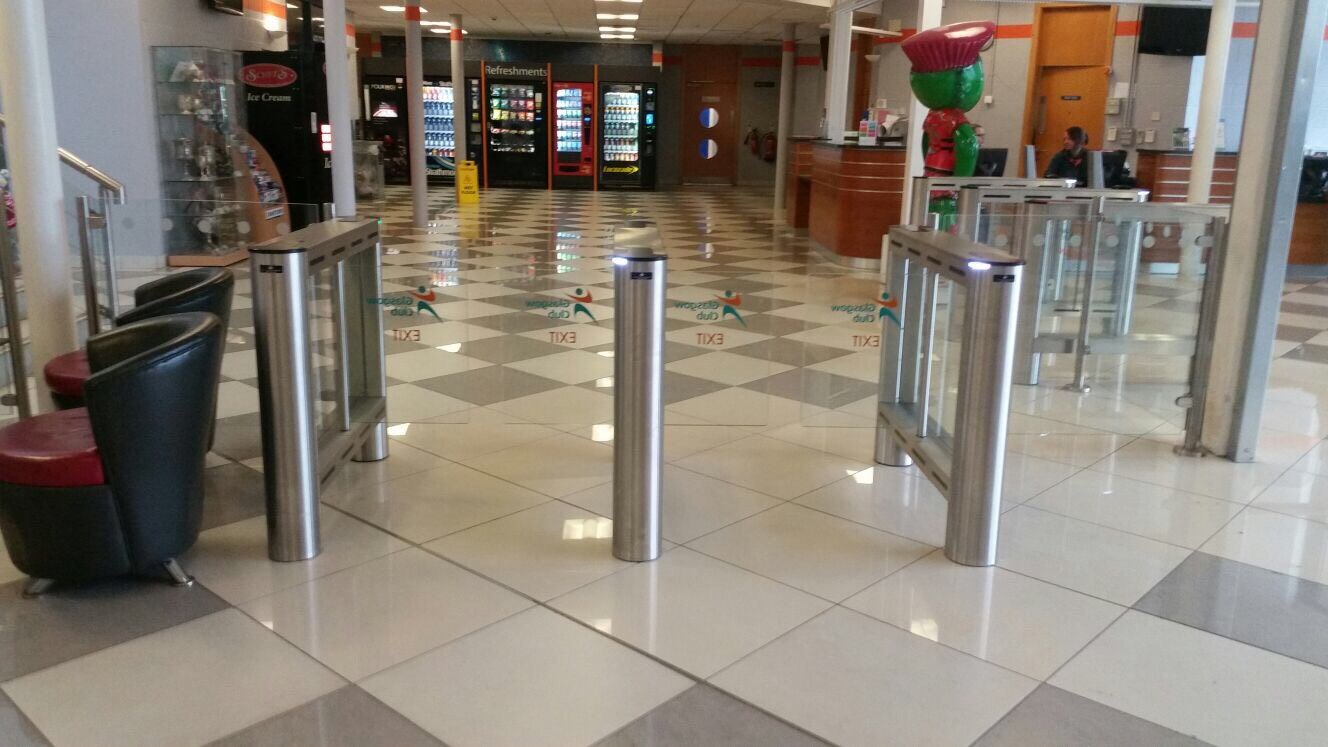
Before an upgrade, ask how it behaves during fire alarms, power loss, network failure and manual override. Check accessibility and privacy, assign maintenance responsibility and agree how the complete system will be demonstrated at handover.
Explore leisure entrance systems ↗Protection begins before the front door.
Consider pedestrian routes, waiting areas, vehicle approaches and deliveries together. Where a competent assessment identifies a need for hostile vehicle mitigation, the solution must fit the site and the required performance.
An ordinary traffic barrier is not automatically crash-rated. For specialist options, assess the complete tested assembly and the suitability of its proposed installation with competent designers and the manufacturer.
ASP can discuss HySecurity StrongArm and StrongSlide options alongside the way your entrance operates. Detailed design and installation information is shared with agreed project participants, rather than published as a general installation guide.
Explore HySecurity perimeter protection ↗A plan needs an owner after handover.
Review arrangements when people, occupancy, entrances, layouts or event activities change. Keep briefing records, exercise findings, maintenance evidence and outstanding actions useful and accessible to those who need them.
Restrict sensitive plans, credentials and control details. Give staff the information they need for their role without publishing operational vulnerabilities.
Choose one realistic busy-hour scenario with your duty team. Identify what they can do confidently, what depends on someone being available, and what needs to change.
ASP can help turn an agreed operational brief into practical, maintainable entrance and security systems. We do not issue a statutory “Martyn’s Law compliant” certificate.
Discuss your venue with ASP ↗Take the operator guide with you.
Use the guide when discussing preparation with your venue team. It is a dated reference; check official guidance for subsequent changes.
Download the operator guide · PDF ↓Copyright edition 005 · October 2026. Permitted for your own venue’s internal reference with credits retained. Republication, rebranding, resale and incorporation into commercial training require permission, except where the law permits otherwise. Full copyright and reuse terms ↗
For project-specific technical information, contact ASP.
Official guidance and further reading
- Home Office: the Act and statutory guidance
- SIA: scope and the regulator’s role
- ProtectUK: frequently asked questions
General information, not legal advice or a guarantee of compliance. Fire safety, accessibility, privacy and other applicable duties continue to apply.
© 2026 110 UK Ltd trading as Alternative Systems Protection. Rights reserved in ASP-owned material. Third-party rights and statutory exceptions are preserved.